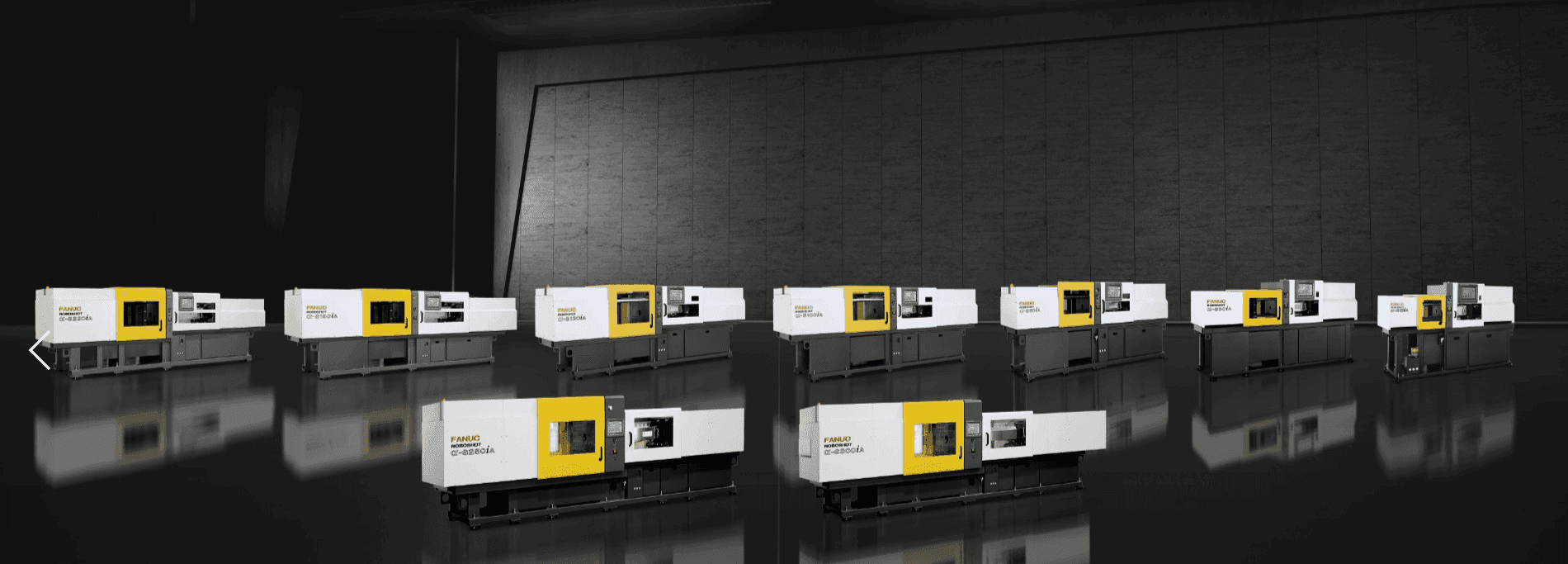
The plastic industry covers a more than 100 years history with constant development of materials, production methods and production equipment. Billions of different products are manufactured every minute of the day all around the globe, using thousands of generic and special raw materials utilizing hundreds of different type of machines. In order to better understand this peculiar industry we decided to conduct an interview with Tinas Engine one of FANUC’s Technical Support Engineers for plastic injection moulding examining what is going on in the world of plastics, and how does the Japanese factory automation giant contribute to this industry.
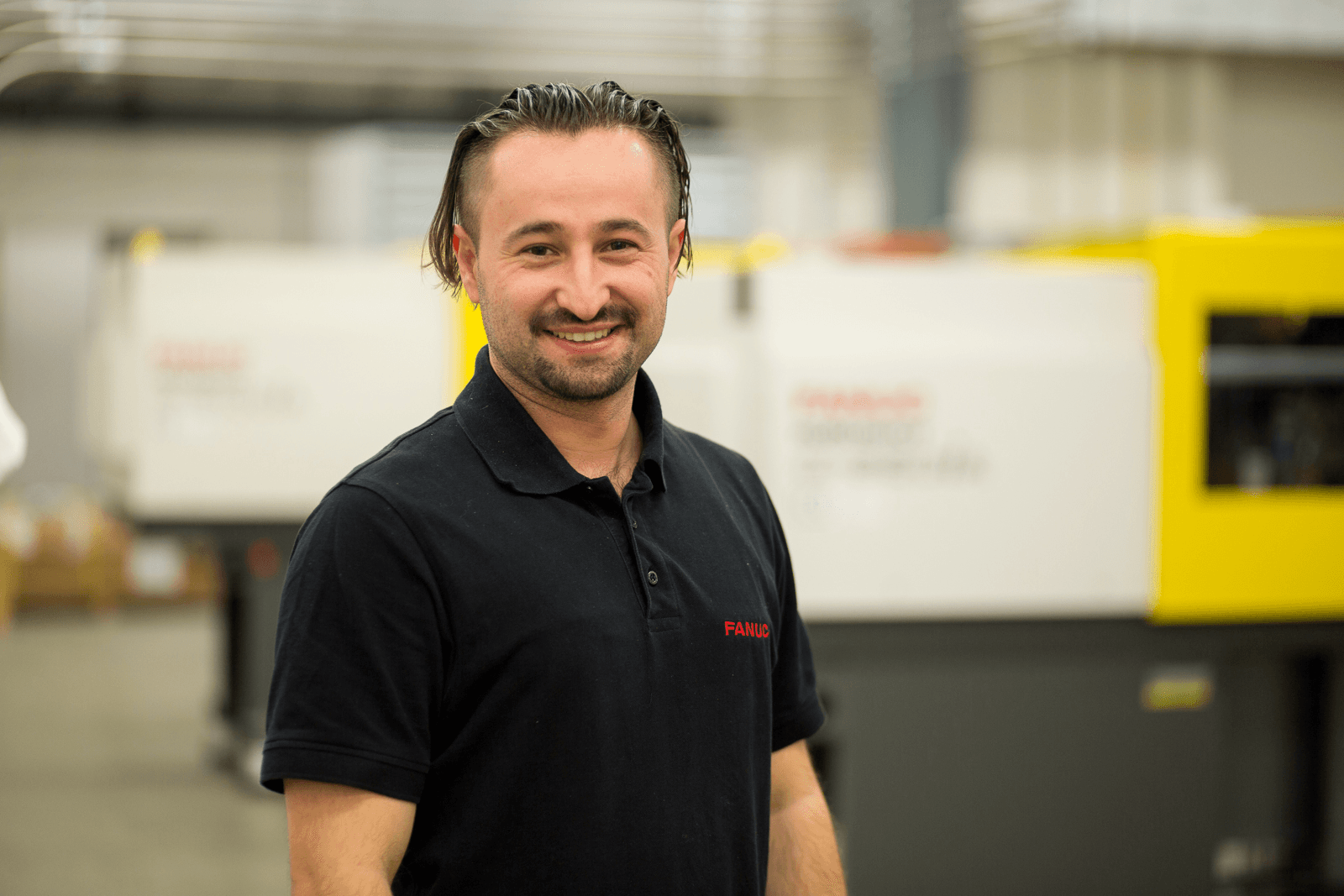
Thank you Engin for accepting the interview. You have more than a decade experience at FANUC being an application engineer supporting customers all around Europe. How would you describe your key tasks?
My most important responsibility is to support customers and subsidiaries in the industry all around Europe who are interested of plastic injection solutions offered by FANUC. This includes sales and technical support for end customers, system houses, integrators, moreover doing tests and on-site trainings. Full of passion for the last 10 years.
Your company is one of the largest factory automation solution provider in the world. What does FANUC has to offer for the plastic industry?
Apart from generic solutions like Robots and CNCs we have our own plastic injection moulding machines with a technology developed for 30 years without interruption. A precise, reliable and customer friendly machine.
Could you tell us about the machine in general? Why is it different than other machines used in the industry?
The FANUC Roboshot first of all is the first fully electric injection moulding machine in the market ever created. It is also equipped with a very powerful CNC control - which is the flagship product of the company with 60 years development -, and servo drives, and many functions like built-in mould protection. The machine uses absolutely no hydraulic oils for movement and to build up the clamping force, everything is done with the servo motors and ball screws technologies.
Are there any additional key features?
Of course. One of the big advantage which is searched by many customers Is that the machine is fully built by FANUC parts with no third parties involved, which ensures quality for all elements of the machine. This also guarantees that there is no shortage of spare part stocks and basically offers lifetime supply for spare parts. Generally the Roboshot has a good advantage for long machine lifetime and has an overall lower cost of ownership rates. Due to the high quality and less parts which could break down there is a lower maintenance cost as well. Lastly, there are more than 20 additional options and features to increase productivity, like pre-injection, and mould protection, and most of them come with the standard machine.
It is true that currently the plastic industry is heavily dependent on hydraulic machines with a large market share, and especially in Europe, local machine suppliers focus more on hydraulic machines. How would you define the key differences which make electric machines an ideal alternative for customers?
In relation with electric machines everything comes down to precision and efficiency. Every part of the machine, every major or minor development was made with a focus of making the machine more precise, reliable and stable in production. First of all due to the movement mechanisms of the electric machines provided by the servo motors controlled with powerful CNC customers gain superior precision and repeatability. Also it is a big advantage over hydraulic machines that they do not use hydraulic oils, therefore for example changes in temperatures does not affect production quality.
From this we can expect that the Roboshot is mostly used in areas where high precision is a must.
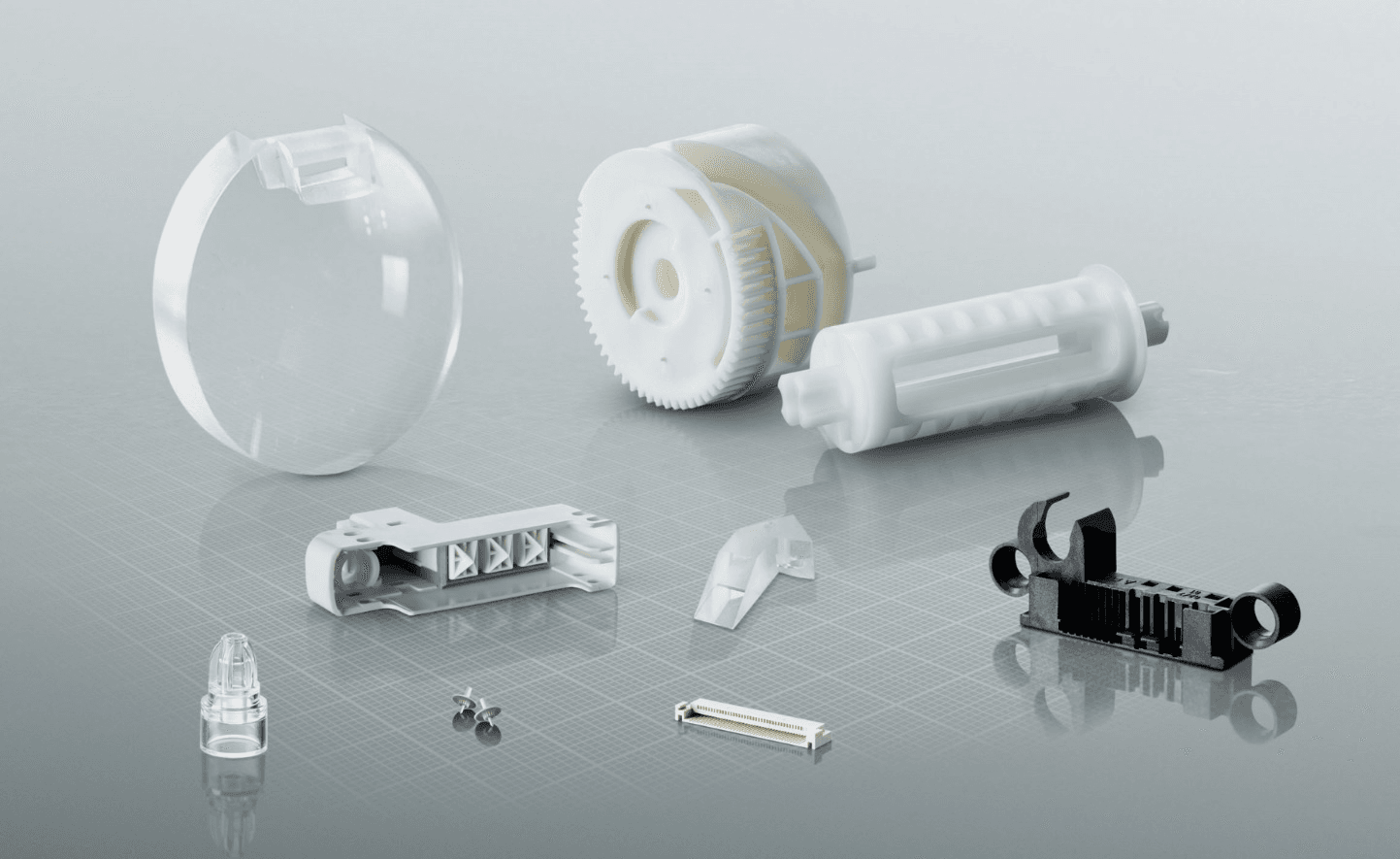
This is true, but not entirely right. Generally FANUC’c moulding machine is taking challenges smoothly in the automotive, medical and optical industry where precision and consistency is an absolute requirement. However, I wouldn’t define Roboshot as a marginal machine for precision injection moulding. It is rather a flexible machine which could produce a wide range of products, therefore producers can easily switch production between generic or special products.
During the latest plastic industry exhibitions it became apparent that multi-component injection moulding is coming more and more to the foreground. The industry is heading towards multicomponents injection moulding. How do you see the situation? Is the industry heading towards multi-component moulding? Why would this happen?
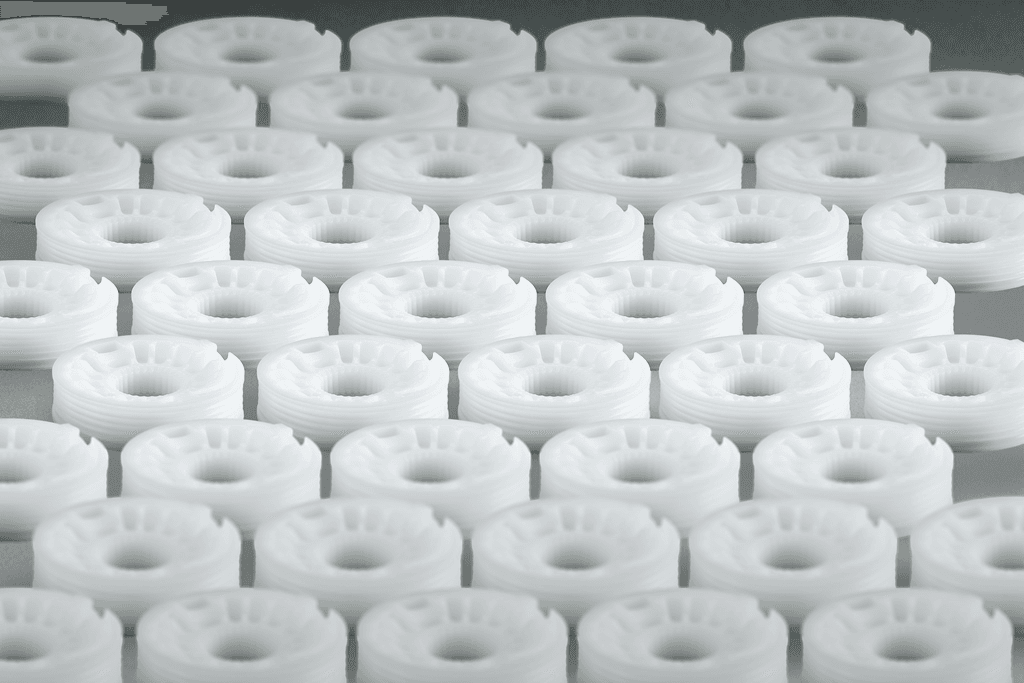
Multi-component moulding is an interesting aspect of the industry. The trend is that producers want to have less machines at their factory, smaller footprint, but keep production levels and flexibility. This means first of all they need more flexible machines and second they need special moulds, with more cavities so they can keep up the same production levels. And the reason why multi-component is getting more popular is of course the end customers, therefore producers want to create products with better properties which better satisfy their needs. For example combining a hard plastic raw material for durability, but adding a second, softer component for the feeling, and production-wise keeping it in one cycle, therefore keeping production speeds at a high level.
The industry is constantly talking about Industry 4.0, the IoT, and integrated production solutions in general. How would you describe FANUC’s efforts in this regard?
All these topics have one key attribute in common. Process control. Since 2006 FANUC Roboshots offer many possibilities to perform process controlling in order to ensure production quality. With the latest version of the machines, complying with the latest requirement of our customers, process controlling offers more insights to production and users can deeply understand what and why is happening during production.
Thank you for the interview Engin!
Author: Attila Bagdi, FANUC Automation Romania S.R.L.